Five caves, one windfall
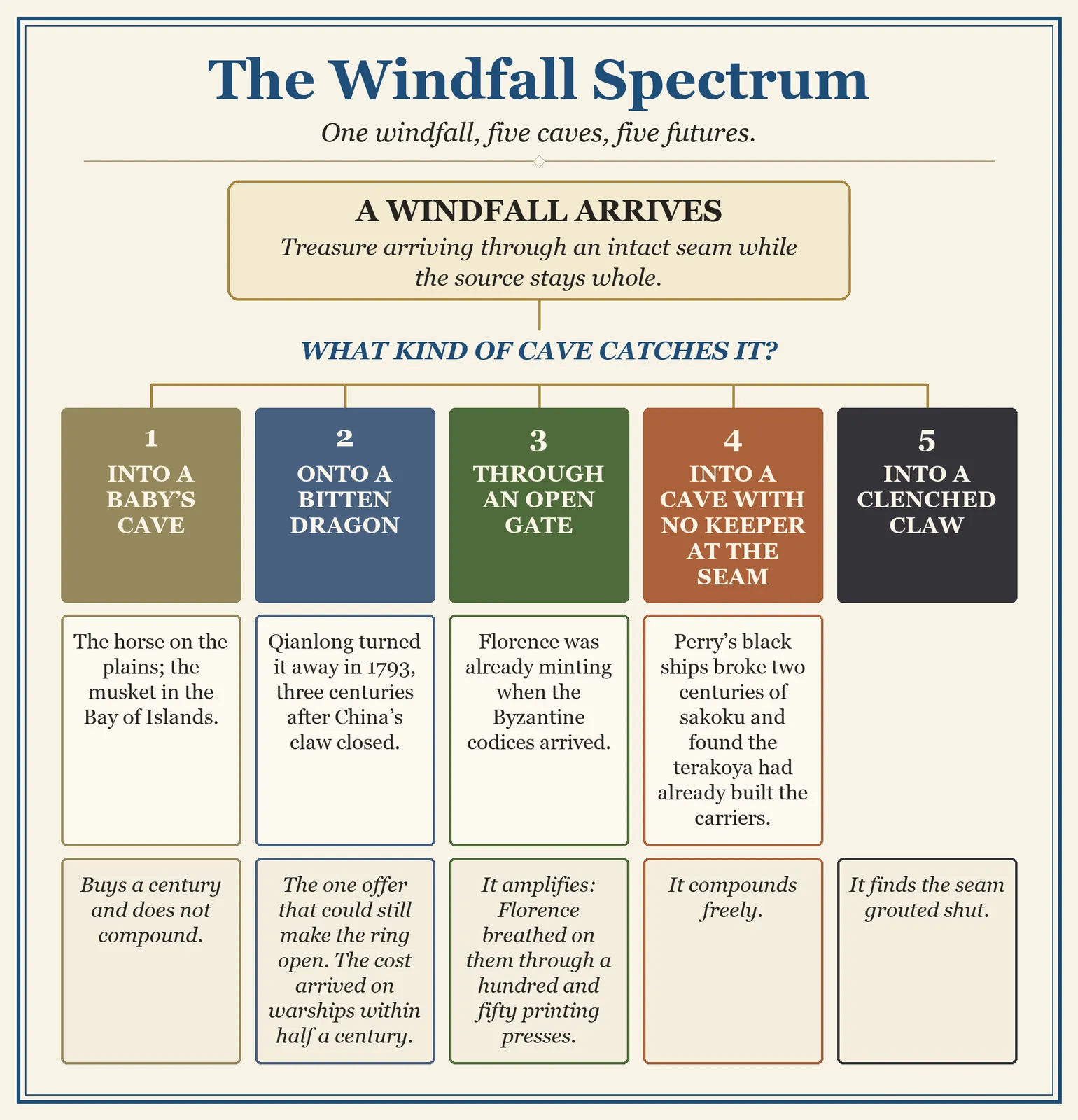
The Windfall Spectrum
What happens when external knowledge arrives, decided entirely by the cave it lands on
A windfall is external knowledge arriving unearned: a technology, a corpus, or a carrier population that the receiving society did not build. What happens next is decided entirely by the state of the cave it lands on.
The event
A windfall arrives
A technology, a corpus, or a carrier population the receiving society did not build. The windfall is the same in every branch below. Only the cave differs.
What state is the cave in?
Branch 1
Baby's cave
Surplus with only bread and spears on the pile: a leader and a structure, but no script, no archive, no scribal class to copy anything forward.
The horse on the plains; the musket in the Bay of Islands · c. 1680 to 1875
The horse remade hunting, war, and range within two generations. But in a baby's cave there was no treasure pile to catch the gain, so each generation held the windfall only as living practice; nothing compounded on the gain itself.
Outcome
Buys a century, does not compound
A hundred years of transformed life, and when the pressure arrived the windfall had produced no second windfall. The gain was real and it was rented.
Branch 2
Bitten dragon
An adult past the bite. The body has closed into a ring, the hoard is judged complete, and knowledge arriving from outside reads as tribute from an inferior rather than treasure.
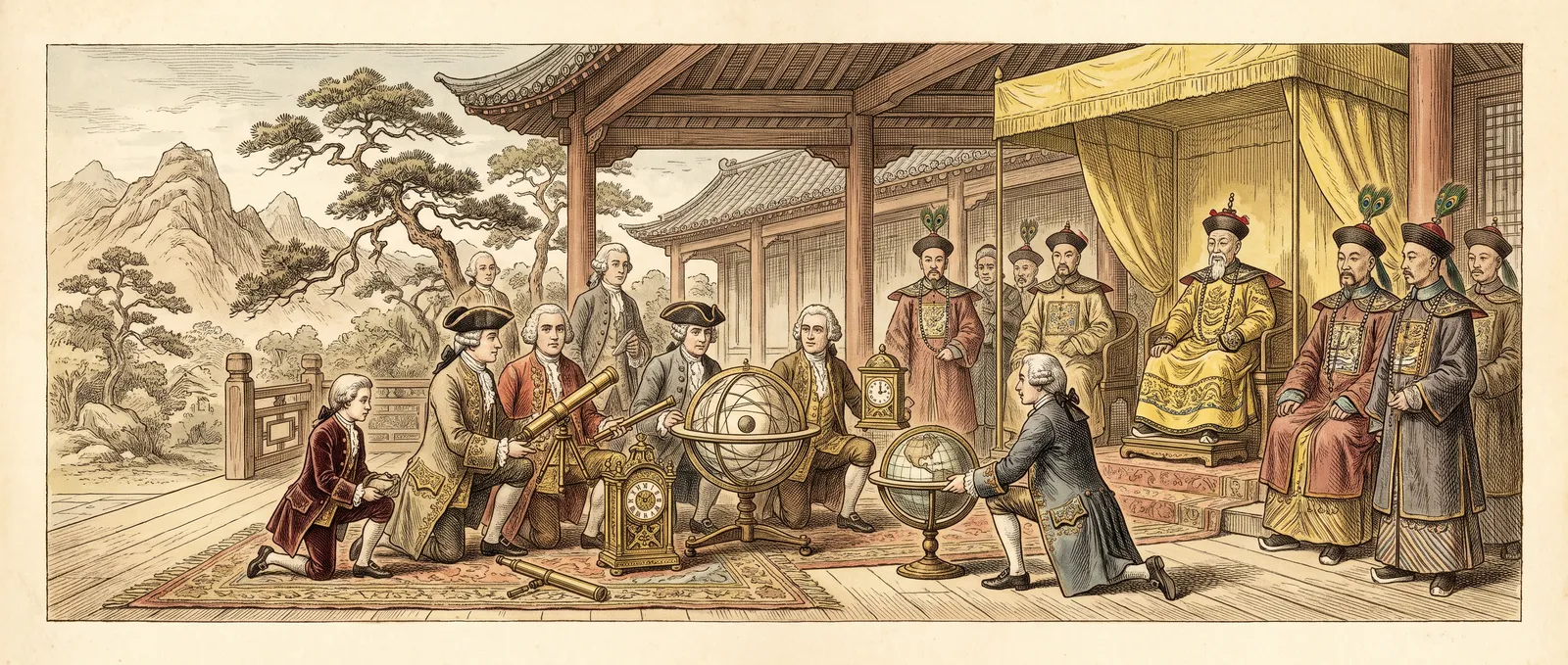
Qing court: Qianlong refuses Macartney · 1793
The embassy carried telescopes, clocks, a planetarium, and a hot-air balloon pilot, arriving three centuries after China's claw closed. The court logged it as tribute from a barbarian king: “we possess all things.” The windfall was refused at the gate.
Outcome
Refused; the cost arrives on warships
A windfall is one of the few things that can still make a bitten dragon spit its tail out, and this one was turned away. The bill came due forty-six years later in the Opium War. A bitten dragon doesn't lose the windfall; it converts the windfall into a future invoice.
Branch 3
Adult dragon, gate open
The cave is minting and the gate stands wide. Scholars enter freely, tribute flows in, and no keeper is posted at the seam deciding who may read what arrives.
Florence catches the Byzantine codices · 1397 onward
Chrysoloras arrives to teach Greek in 1397; the refugees of 1453 arrive carrying the rest. Florence was already minting when the Byzantine codices arrived, and Venice, where Bessarion gave his 482 Greek codices in 1468, breathed on them through a hundred and fifty printing presses and more by 1500.
Outcome
Amplifies the minting already under way
The codices didn't start the Renaissance; they poured accelerant on a fire already lit. An open gate turns a windfall into a multiplier on work already in motion.
Branch 4
Open cave, no keeper at the seam
Deep cave, dense carriers, and nobody posted at the seam rationing access. The dragon is present; it is simply not gating.
Perry's black ships in Edo Bay · 1853
Perry's black ships broke two centuries of sakoku and found the terakoya had already built the carriers, with nobody standing between them and the new treasure.
Outcome
Compounds freely
Forty years from gunboats to a constitutional industrial state. The windfall met carriers already built and a seam nobody had grouted shut.
Branch 5
Clenched claw
The cave is full and the carriers exist, but the claw has closed on the last gate: an institutional gate of licensure and billing codes decides who may touch the hoard.
The modern professions meet the machine windfall · now
The largest windfall since movable type is standing at the seam, and the claw is clenched around licensure, billing codes, and gatekept access. The windfall cannot be refused the way Qianlong refused his. It routes around the gate instead.
Outcome
Disruption is the cure, not the problem
When the claw is clenched, the windfall's arrival looks like an attack on the profession. It is the opposite: the only force strong enough to unground the seam before the dragon closes the ring.
The spectrum reads bottom-up
The five branches are one variable turned: how much structure stands between the windfall and the carriers. A baby’s cave and the gain evaporates in a century. A bitten dragon converts it into a future invoice. An open gate multiplies minting already in motion. A cave with no keeper at the seam compounds freely. And a clenched claw, a seam grouted shut, is the only branch where the windfall’s arrival looks like the problem when it is in fact the cure.
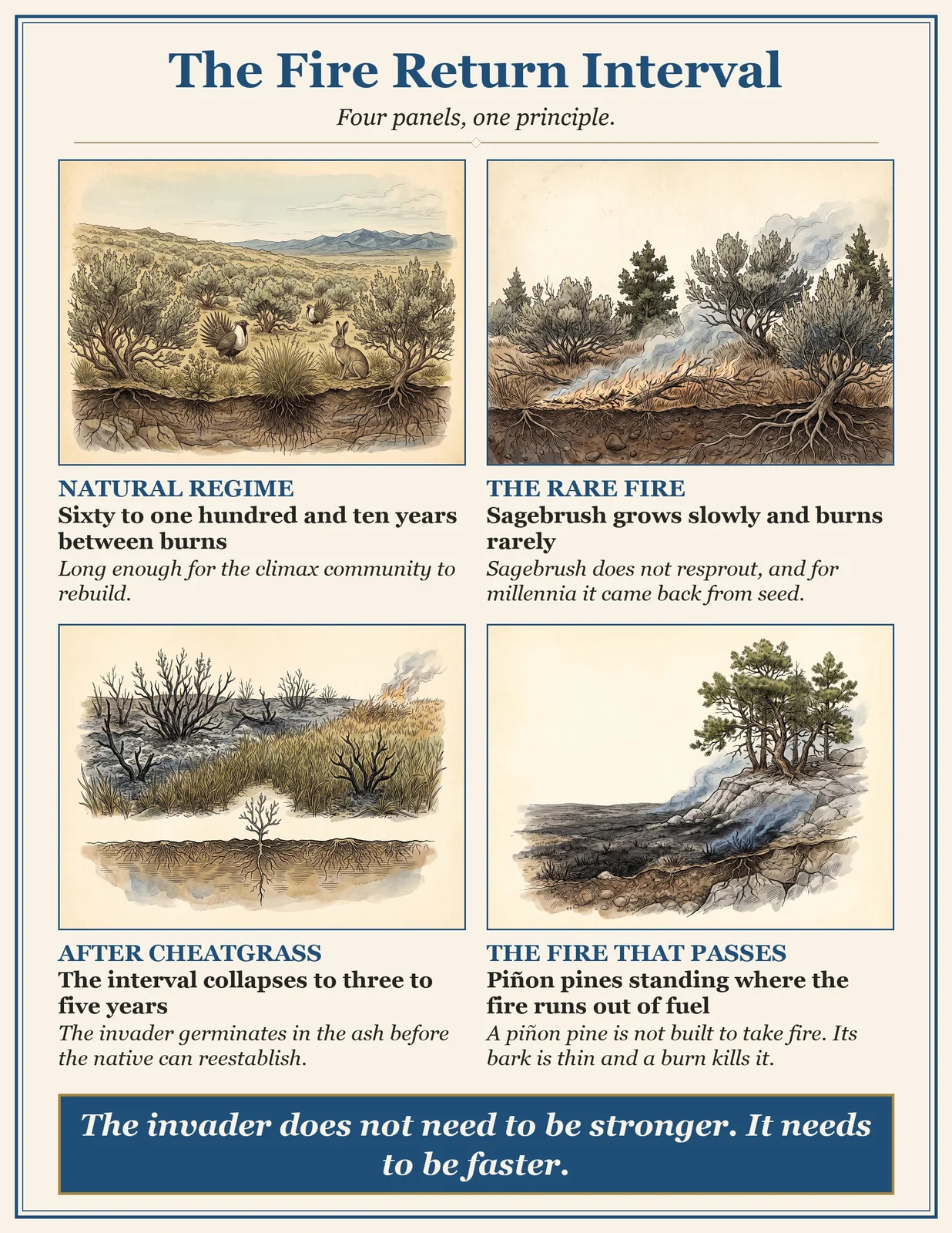
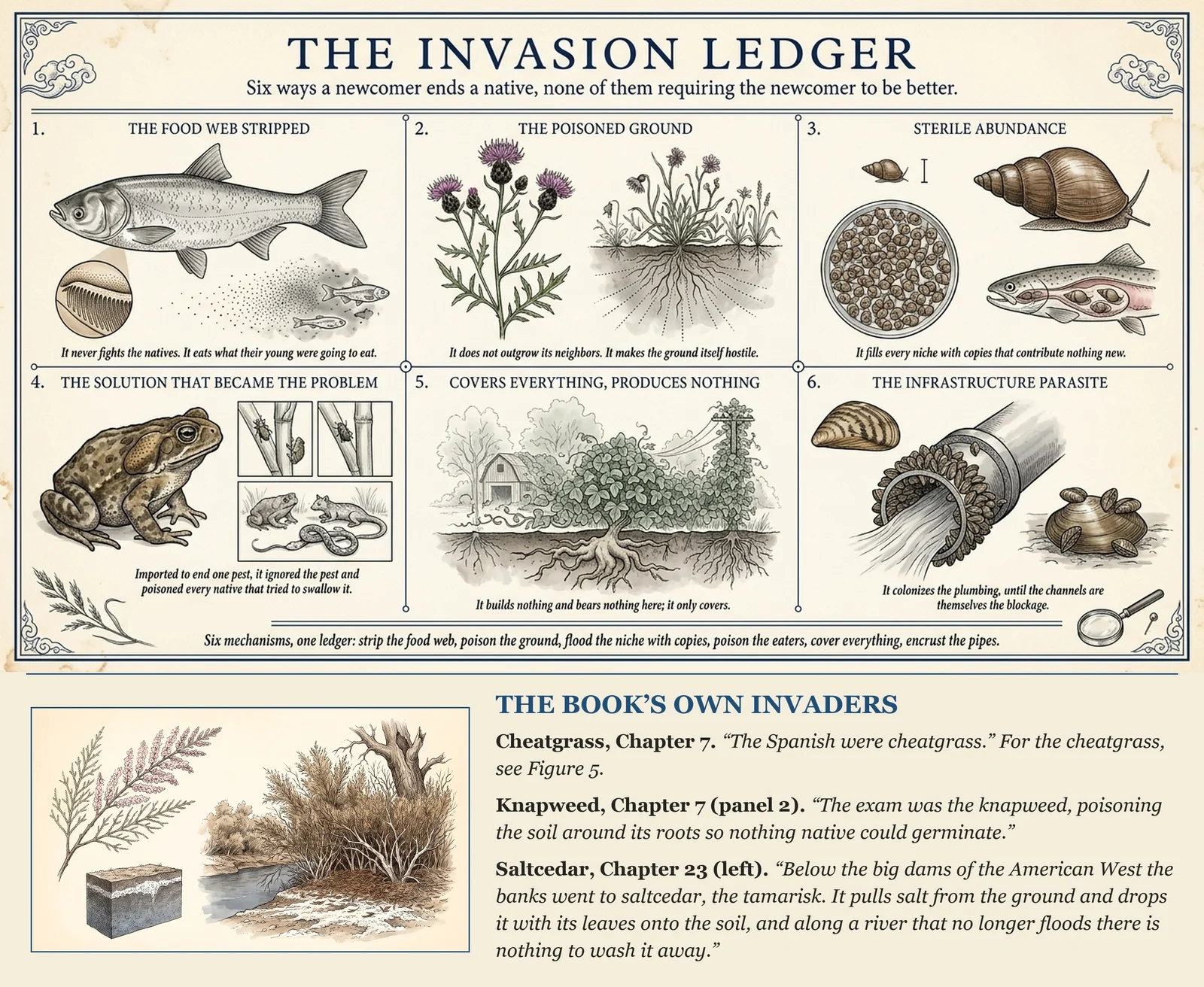
Chapter 7’s ecology: the fire and the invaders
The chapter borrows two measures from range ecology before it names the windfall: how often the fire comes back, and the six ways a newcomer ends a native without being better than it.