Burns and clear-cuts
The Purging Spectrum
Six purges, measured by the only clock that can tell them apart
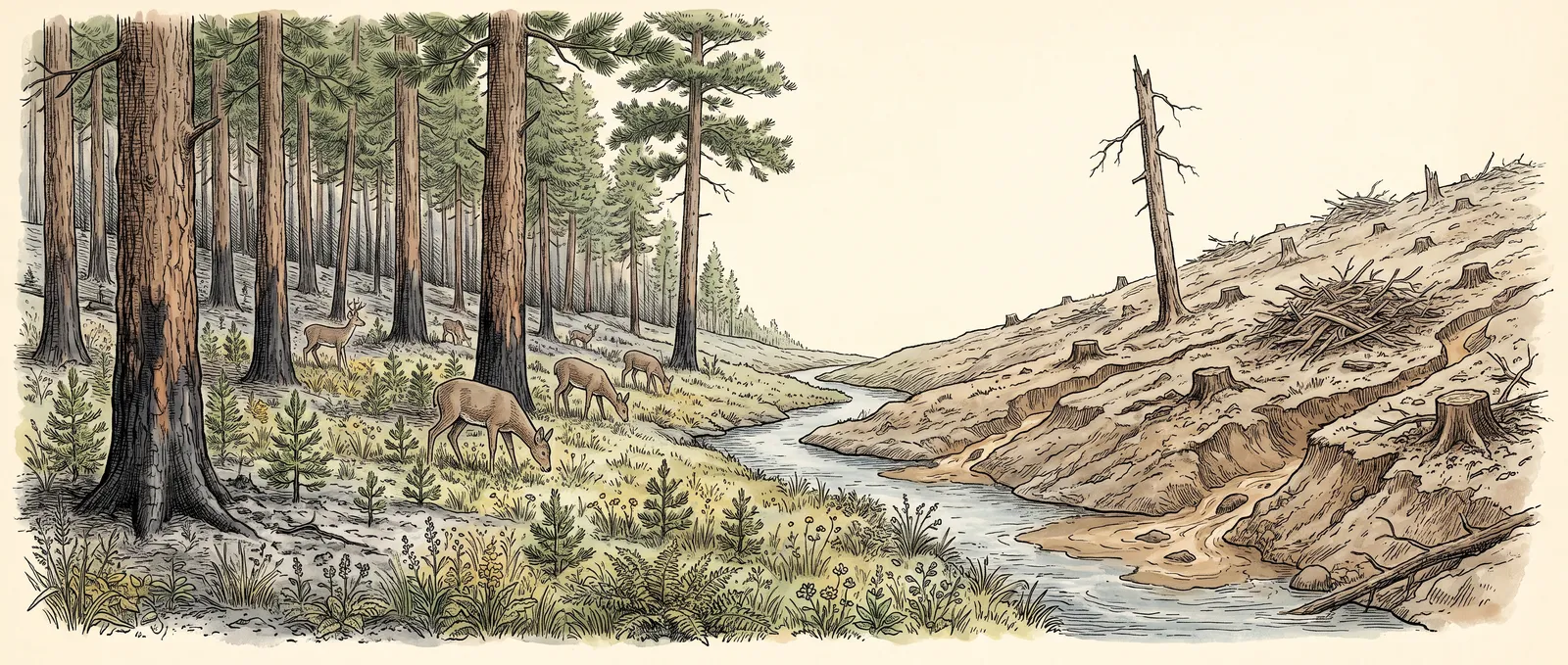
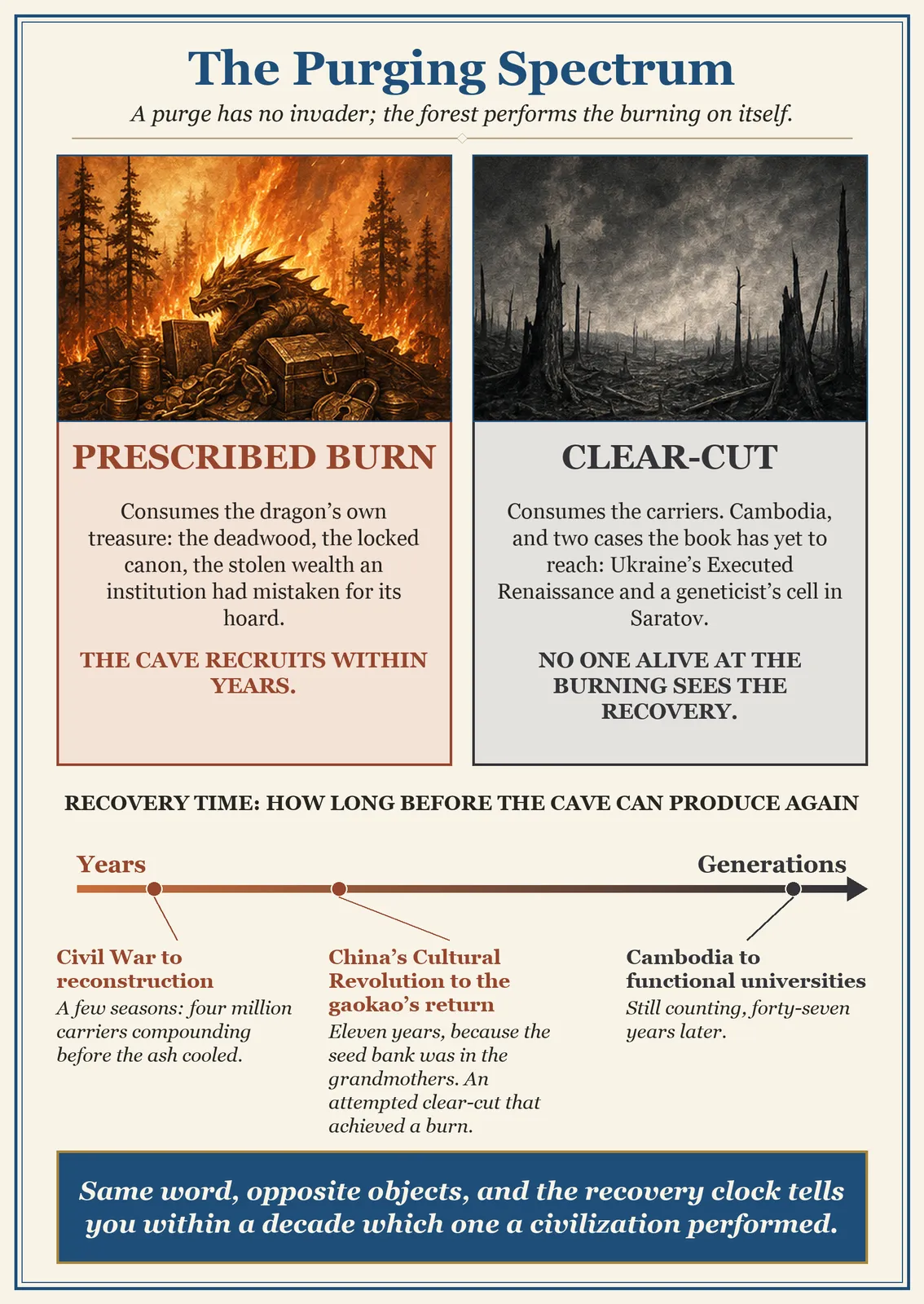
Same word, opposite objects. A prescribed burn consumes the dragon's own treasure: the deadwood, the locked canon, the stolen wealth an institution mistook for its hoard, and leaves the carriers standing. A clear-cut consumes the carriers. Recovery time is the measurement that separates them.
- Prescribed burn (burned the dragon, not the carriers)
- Clear-cut (consumed the carriers)
Order-of-magnitude readings, not precise measurements. Hover a bar for what burned and what was spared.
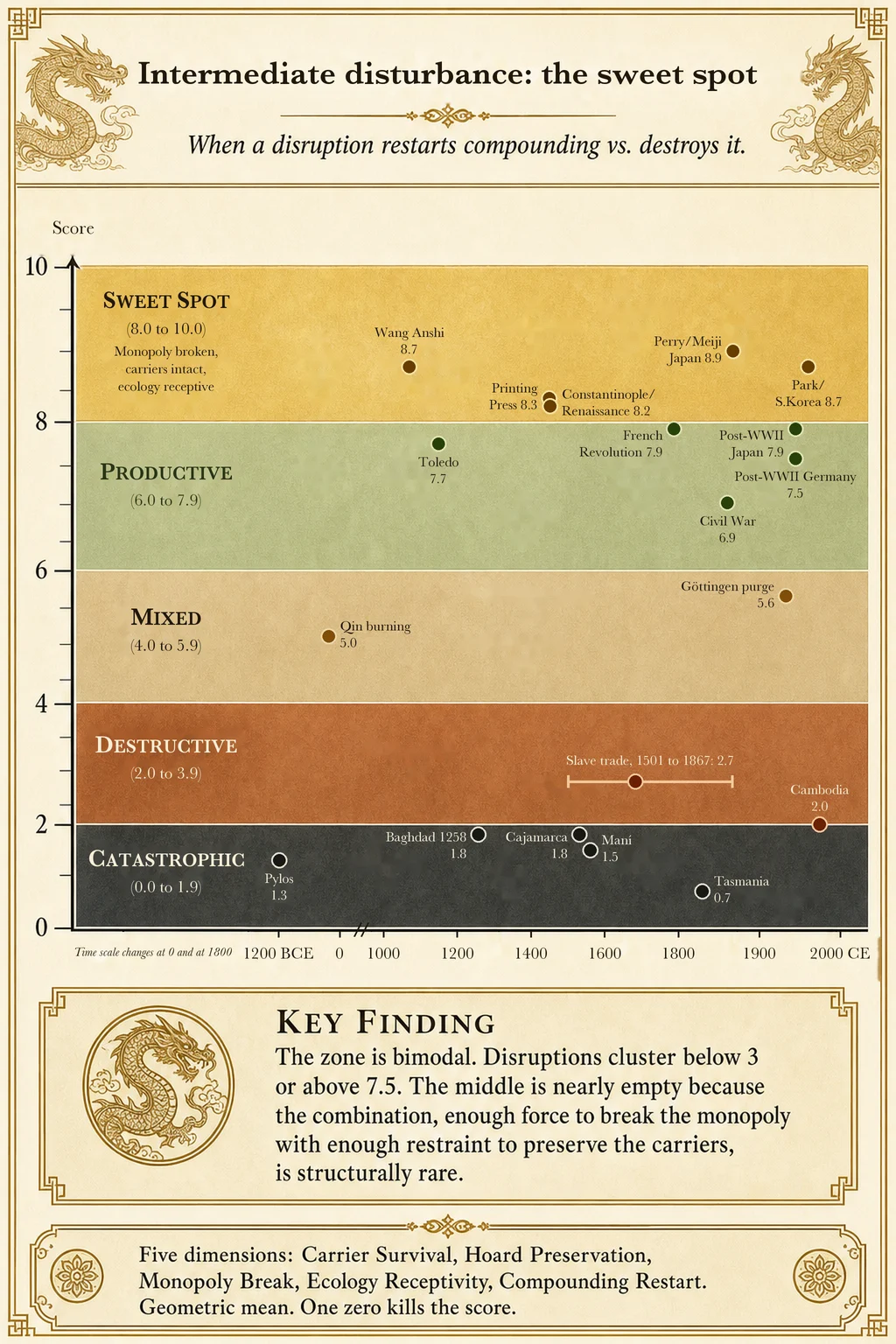
The six cases
US Civil War
Prescribed burn · a few seasonsBurned: The extraction economy and the laws that made teaching a slave a crime
Spared: Four million carriers, freed
The Civil War burned the richest extraction economy on earth to unlock four million carriers, and the carriers began compounding before the ash cooled: a few seasons (Ch 20). Freedmen's schools opened while the war was still burning.
Meiji Restoration
Prescribed burn · ~10 yrsBurned: Sakoku and the Tokugawa status order
Spared: The terakoya-built carrier population, already among the most literate on earth
The restoration broke the closed system, not the schools. The carriers were already built, so the windfall compounded almost immediately: forty years from black ships to industrial state.
French Revolution
Prescribed burn · ~10 yrsBurned: The ancien régime's orders, venal offices, and corporate privileges
Spared: The knowledge class, with exceptions like Lavoisier, the Republic of Letters continued
For all the Terror's famous victims, the burn took the structure and largely spared the carriers. The École Polytechnique opened in 1794, inside the revolutionary decade itself.
Cultural Revolution
Prescribed burn · 11 yearsBurned: Intellectuals purged, universities closed, a decade of carriers sent to the countryside
Spared: The seed bank: it was in the grandmothers
An attempted clear-cut that achieved a burn. From the Cultural Revolution to the gaokao's return in 1977: eleven years, because the seed bank was in the grandmothers (Ch 20).
Cambodia / Khmer Rouge
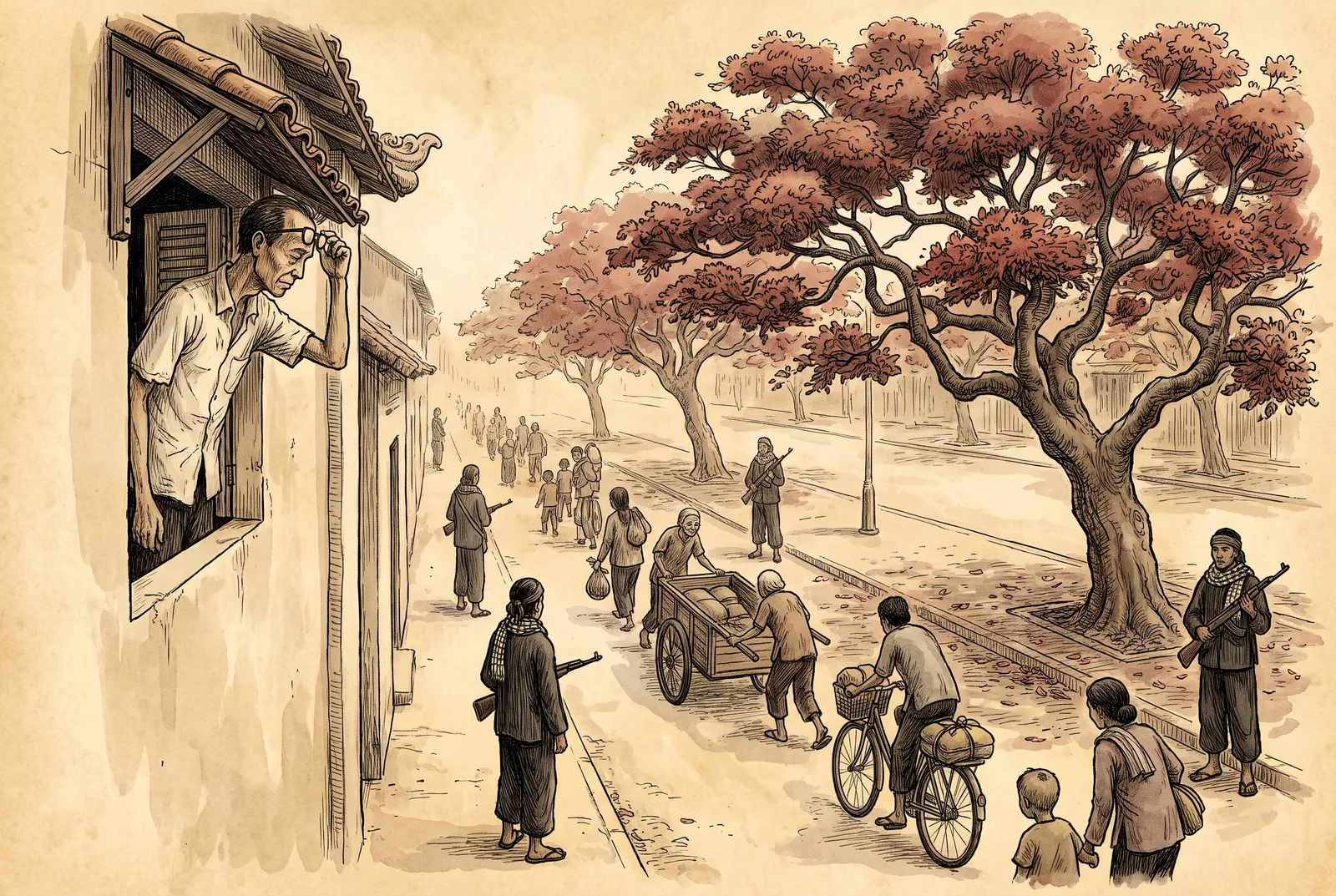
Clear-cut · still counting, 47 yearsBurned: The carriers themselves: teachers, doctors, anyone with glasses
Spared: Almost nothing: an estimated three-quarters of teachers dead or fled
A purge aimed squarely at the carrier population. Cambodia to functional universities: still counting, forty-seven years later, because the soil was scraped to mineral (Ch 20).
Executed Renaissance (Ukraine)
Clear-cut · ~40 yrsBurned: Ukraine's writers, found by name: the maw turned its fire on a dragon's mint
Spared: Institutes gutted and refilled with Lysenko's people
The book's Executed Renaissance is Ukraine's (Ch 22), and it stands beside a geneticist's cell in Saratov: Vavilov starved in prison in 1943, and Lysenko held Soviet genetics until 1964. The recovery reading here is the site's estimate, not a number from the book.
What the clock says
Finding 1
Same word, opposite objects
Every case on this chart gets called a purge, a revolution, or a burn. The word hides the only distinction that matters: what was in the fire. A prescribed burn consumes the dragon (the extraction economy, the closed system, the ancien régime) and leaves the carriers standing. A clear-cut consumes the carriers themselves.
Finding 2
Recovery time is the measurement
You cannot always tell a burn from a clear-cut while the smoke is still up; both look like catastrophe from inside. But the recovery clock separates them cleanly. Burns recover in years because the carriers walk out of the ashes and start compounding. Clear-cuts recover in generations because carriers are the one asset that can only be regrown at biological speed.
Finding 3
The carriers were already built
The burns share a precondition: the carrier population existed before the fire. Freedmen's schools filled because four million people were ready to fill them. Meiji compounded because the terakoya had done its work for two centuries. The burn doesn't create the carriers. It removes what was sitting on them.