The claw mark, measured
Legacy Persistence
How long institutional sorting stays readable after the sorting ends
Eight cases where a sorting pressure (occupational confinement, examination systems, hereditary caste, land practice) left a mark that can still be measured today. Some marks are written in genomes, some in records, some in the landscape itself. The chart plots how long each mark has persisted against how loudly it still reads.
- Genetic marker
- Institutional / records
- Landscape / ecological
- Ring = sorting still active
Hover a point for the measured signal. Persistence years follow the manuscript’s figures; strength is a qualitative 1-10 reading.
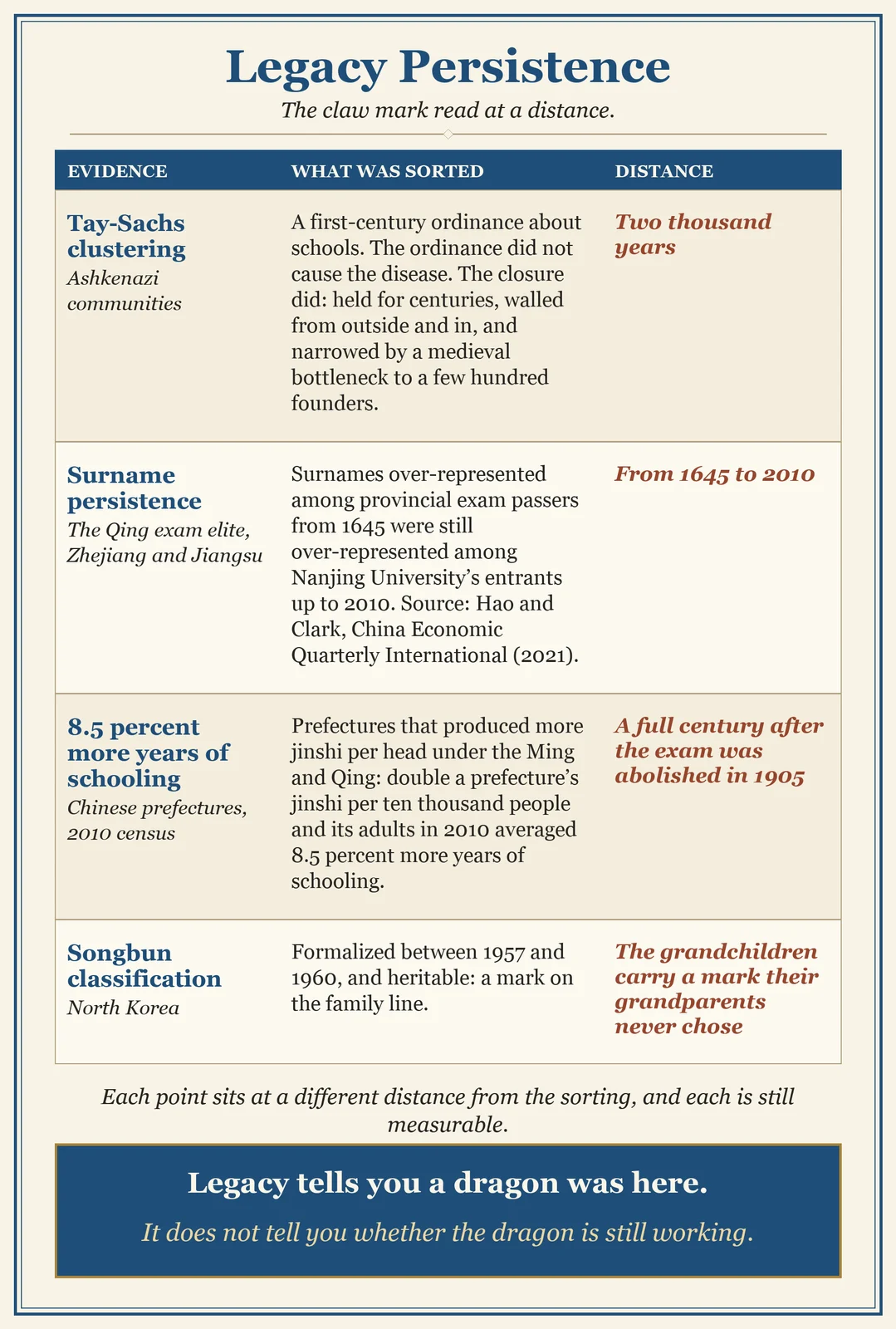
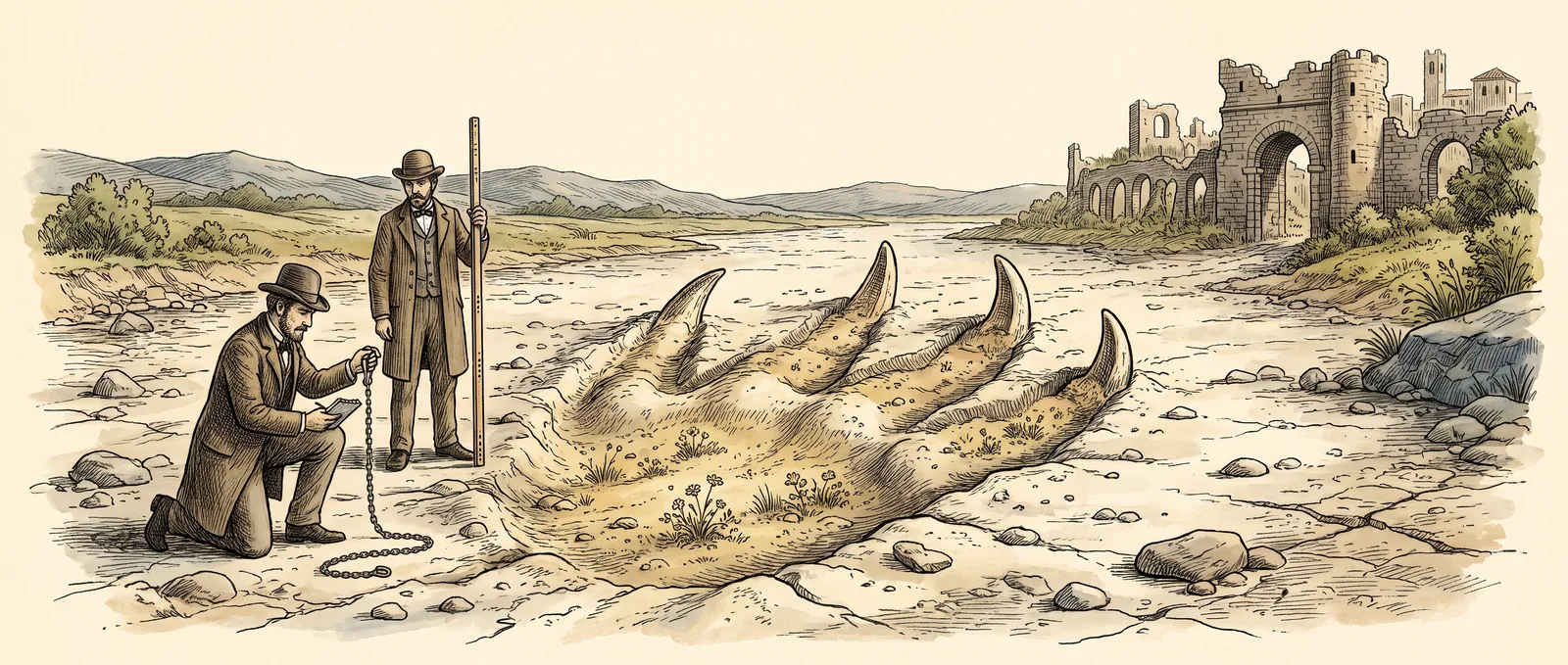
“Legacy is the claw mark read at a distance.”
The dragon’s grip on a population doesn’t end when the dragon dies. Seal a community with marriage laws for two millennia and the closure is still legible in a carrier screen today. Run an examination system for thirteen centuries and the winning surnames are still concentrated in the old examination districts. The sorting stops; the mark keeps reading.
China’s case in full, from the Y chromosome to the clan books: China: The Blood and the Paper.
Two patterns in the chart: marks whose sorting is still active (songbun, jati endogamy, Samaritan marriage) sit at the top of the strength axis, because the sorter never stopped writing. And the oldest marks are ecological: the vegetation on abandoned terraces, the charcoal in Australian soil cores. That is because the landscape forgets more slowly than institutions and faster than genomes are rewritten.