The Scribe’s Advantage

Test it yourself

Score Your Own

Pick any civilization or profession and see if the pattern holds
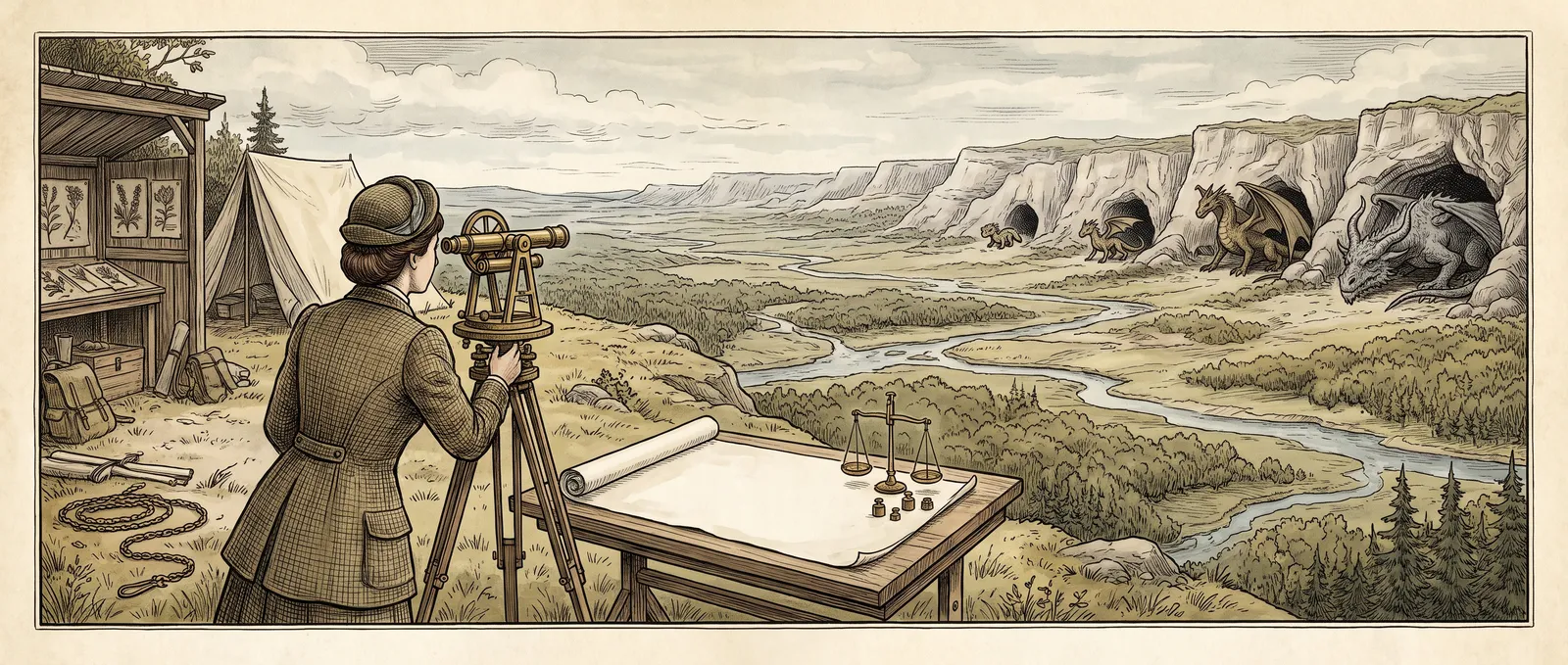
Wide plate: a woman in a nineteenth-century field coat sights through a brass theodolite from a hilltop camp over a valley of cliffs with cave mouths, where dragons of four sizes rest at their doors; a plane table with a blank sheet, a balance with small weights and a surveyor's chain in the foreground.
The survey station. A surveyor sights across a valley of caves, each with a dragon of a different age at its gate. The form below does the same measuring. Full size

Name a civilization or a profession. Score it on the four axes, check the three capture conditions, and see which fate pattern it matches and which of the book's cases sit closest to it.

Governmental stabilitySurplusCarrier densityScribal outputCredentialing monopolySelf-regulating classNo exit
2. Score the four axes (0-3)
2 stable
0123
2 sufficient
0123
2 moderate
0123
2 substantial
0123
3. Check the capture conditions

Result

Unnamed case

Axis total

8/12

Capture score

0/3

Stability

Surplus

Carriers

Output

MonopolySelf-reg.No exit

Pattern

No capture: the exit keeps compounding

Fewer than two conditions are met. Someone can always walk to Ferrara. Late Medieval Europe, the Dutch Republic, and Phoenicia stayed here for centuries. The risk is not stagnation but the slow rise of a credentialing monopoly; watch the first checkbox.

Nearest cases in the book

  • Kerala1400 CE to 1800 CE · Compounding · capture 0d = 0.58
  • Timbuktu1300 CE to 1591 CE · Compounding · capture 0d = 0.66
  • Sumer2600 BCE to 2100 BCE · Compounding · capture 0d = 0.92
  • South Korea 1961-20261961 CE to 2026 CE · Recovery · capture 0d = 1.07
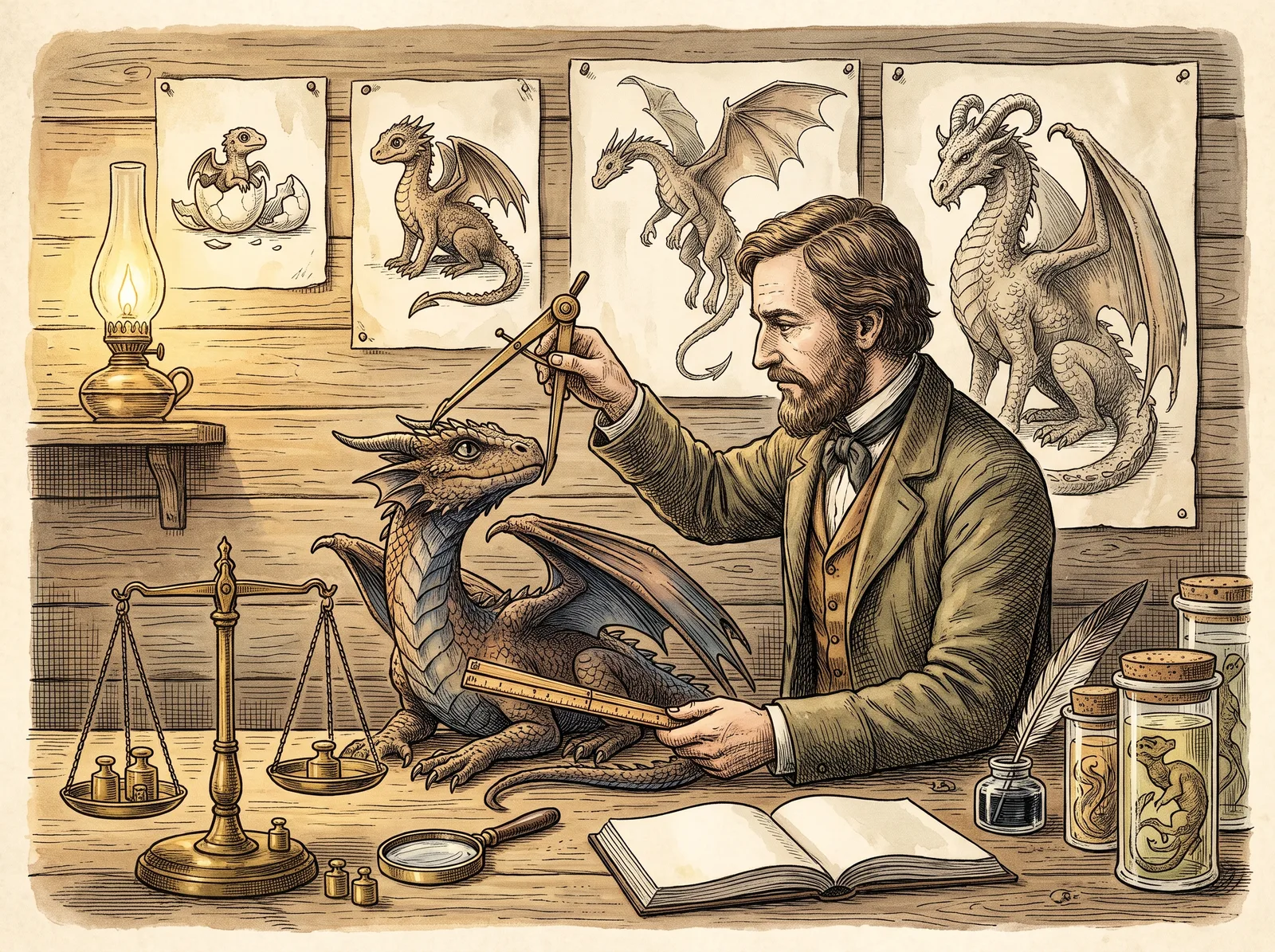
Pen and ink plate of a nineteenth-century naturalist measuring a live young dragon on a workbench with brass calipers and a rule; on the bench a balance with small weights, a magnifying glass, an open blank ledger, an inkwell and quill and specimen jars; pinned to the wall behind him, four sketches of dragons from a hatchling in its shell to a horned elder.
Companion illustration · Test it yourselfScore your ownA naturalist with calipers and a rule, a balance with its weights for the four axes, and on the wall the four ages from hatchling to elder. That is what the form above does: measure a civilization or a profession, check the three conditions, and see which of the book's cases it sits nearest.Full size