Three kinds of burial
The Three Sediments
Muck from the dragon, salt from the river, rot from time alone
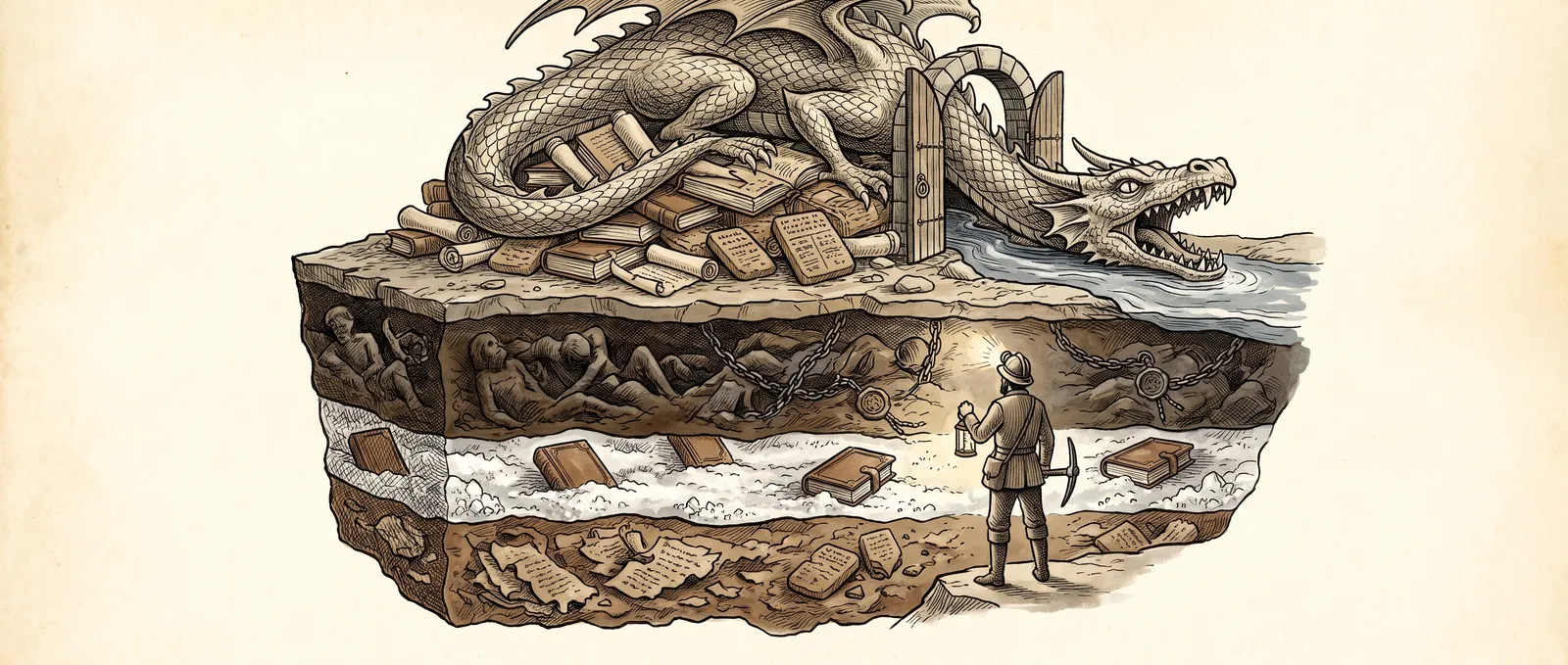
Three kinds of burial, three different culprits. Muck comes off the dragon and lands on people. Salt comes down the river and crusts on the treasure as the current stalls, burying it from the reader. Rot needs no current and no dragon, only enough years: it is what time does to the hoard when nobody recopies it. In this century all three are settling at once.
Muck
From the dragon
Buries people
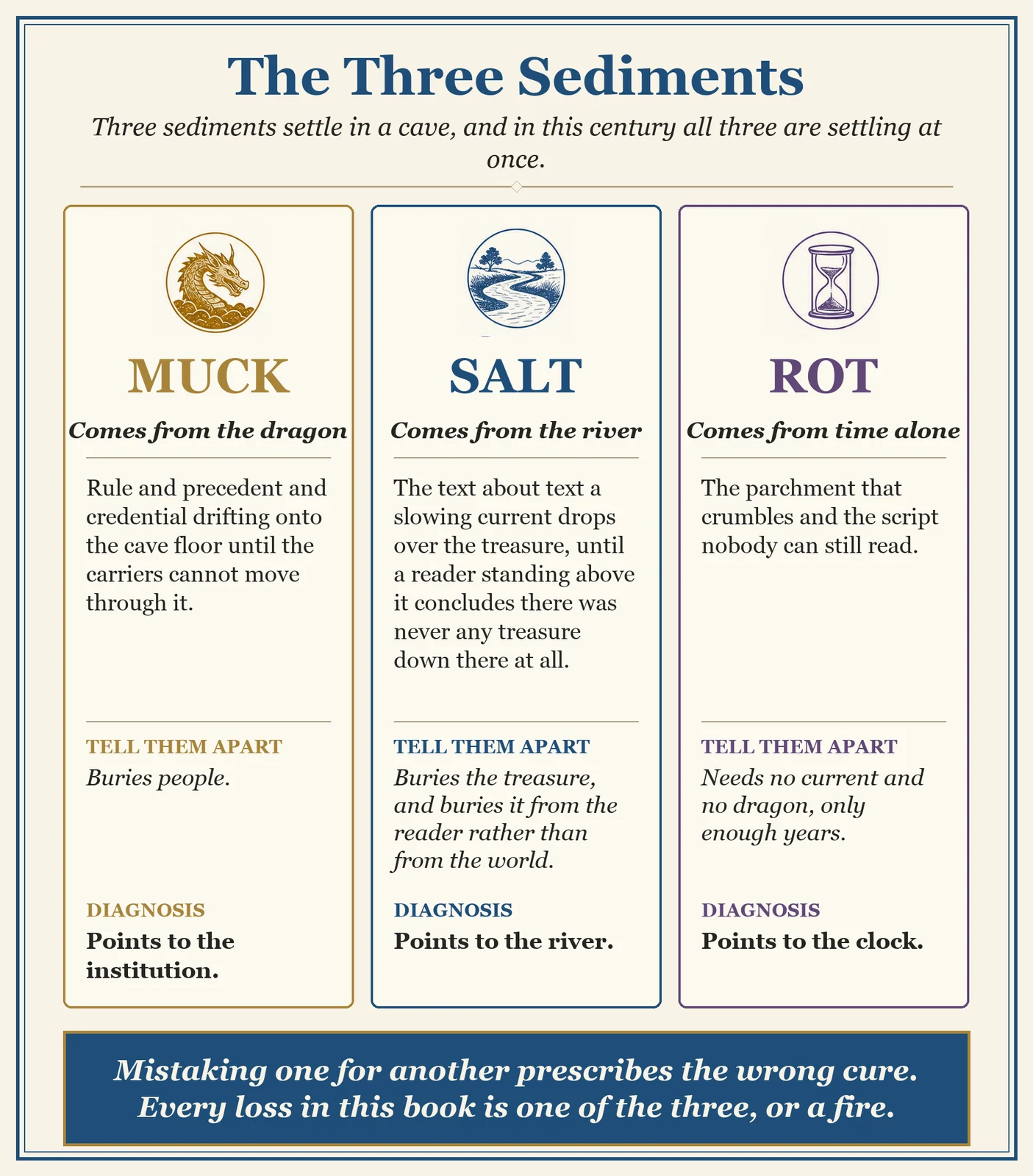
Rule and precedent and credential drifting onto the cave floor until the carriers cannot move through it. Muck doesn't touch the texts at all; it settles on the people who would have read them.
- Credentialing drift
- Rule accumulation
- Legal precedent burying the statute
Salt
From the river
Buries treasure from the reader
The text about text a slowing current leaves on the treasure as its water goes to the sun, until a reader standing above it concludes there was never any treasure down there at all. Salt buries the treasure from the reader rather than from the world.
- Commentary on commentary
- Text about text
- The late scholastic corpus
Rot
From time alone
Decays the hoard itself
Needs neither dragon nor river. Rot is time working on the physical hoard: the parchment that crumbles and the script nobody can still read. The only cure is recopying, and recopying needs carriers.
- Parchment crumbling
- Scripts nobody can read
- Palm leaves in Kerala's humidity
The rules that keep them apart
Each sediment has exactly one thing it never touches. The rules are the definitions.
Muck never describes texts.
Salt never describes people.
Rot never involves the river.
Cases from the book, sorted
| Example | Sediment | Why it sorts there |
|---|---|---|
| Credentialing drift in the modern professions | Muck | The gates multiply on the people; the texts are untouched. |
| Legal precedent burying the statute | Muck | The book files precedent with rule and credential: it drifts onto the cave floor and buries the carriers who must work through it. |
| Palm-leaf manuscripts in Kerala's humidity | Rot | Neither dragon nor river involved; the substrate itself decays without recopying. |
| Commentary on commentary in the late scholastic corpus | Salt | The river's own load, left as the current stalls: each generation writes about the writing before it. |